
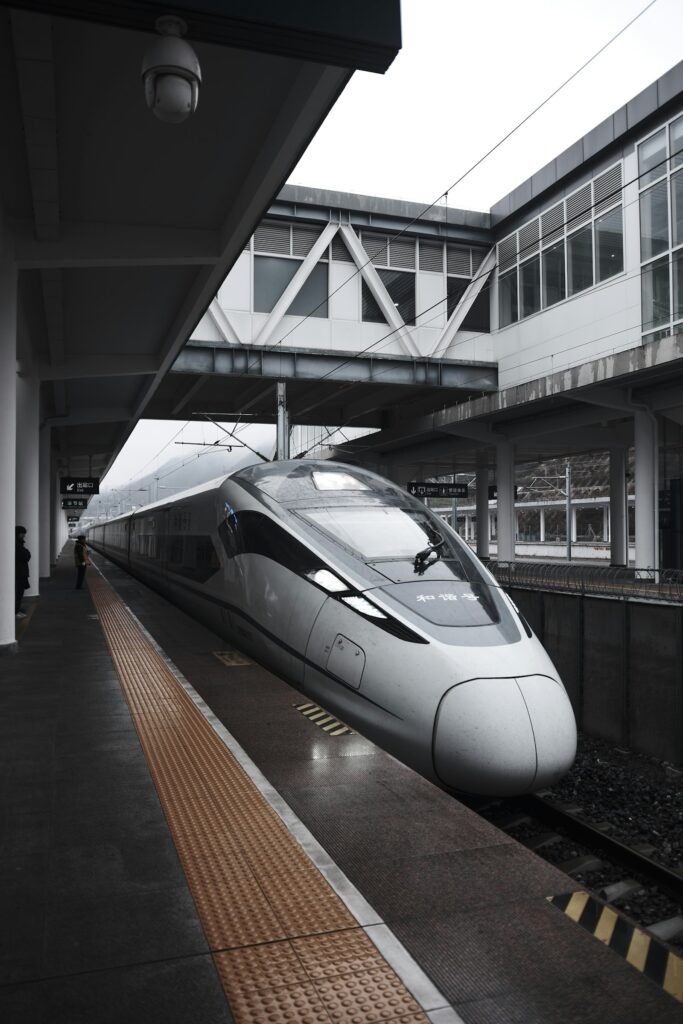
Africa’s first high-speed train is Moroccan — and it changes everything about traveling between the north and the big cities.
Al Boraq links Tangier to Casablanca at up to 320 km/h, cutting a journey that once took almost 5 hours down to about 2 hours 10 minutes, with Kenitra and Rabat on the way.
If you are landing in Tangier by ferry or plane and heading south — or doing it in reverse — this is the smartest way to travel. Here is everything you need: prices, classes, booking, and the tricks locals use.
Quick Answer
Book on the ONCF website or app a few days ahead, choose second class (it’s excellent), and board at Tangier Ville station. Tangier → Casablanca takes ~2h10 and costs roughly 150–250 MAD in 2nd class depending on the fare and time (verify current fares at booking).
The Route and Journey Times
| Route | Approx. time |
|---|---|
| Tangier → Kenitra | ~50 min (high-speed section) |
| Tangier → Rabat | ~1 h 20 |
| Tangier → Casablanca | ~2 h 10 |
The dedicated high-speed line runs between Tangier and Kenitra; the train then continues on upgraded classic tracks to Rabat and Casablanca. There are departures roughly every hour through the day.
Prices and Classes
Fares are dynamic — like airlines, prices rise as the train fills and vary by time of day. Approximate ranges:
| Class | Tangier–Casablanca |
|---|---|
| 2nd class | ~150–250 MAD |
| 1st class | ~250–370 MAD |
Is First Class Worth It?
First class gets you a guaranteed larger seat (3 across instead of 4), more legroom and a quieter carriage. On a 2-hour trip, second class is honestly very comfortable — clean, air-conditioned, with power sockets. Choose 1st class on busy days (Friday and Sunday evenings, holidays) when 2nd class fills completely.
Because pricing is dynamic, the same seat can cost noticeably more on the day of travel. Booking 3–7 days ahead usually catches the lower fares, and guarantees a seat on peak trains.
How to Book
- ONCF website (oncf-voyages.ma) or the ONCF app — pay by international card, get an e-ticket with QR code. The most convenient option for travelers.
- Station ticket machines — English/French interface, accept cards.
- Ticket counters — fine, but expect queues at peak times; cash accepted.
Your e-ticket QR code is scanned at platform access gates — keep it ready on your phone, with a screenshot as backup in case of dead battery.
The Stations
Tangier Ville
A modern station south of the city center — not to be confused with Tangier Med port, which is 45 km away. From the medina or port area, a petit taxi takes ~10–15 minutes (~15–30 MAD on the meter). Arriving by ferry at Tangier Med? Allow at least 1.5 hours between ship docking and train departure: shuttle or taxi to the city takes ~45–60 minutes.
Rabat Agdal
Al Boraq serves the new Rabat Agdal station, in the modern district — a short taxi from the medina and the Kasbah of the Udayas.
Casa Voyageurs
Casablanca’s main station, renovated and connected to the tramway. Taxis to the Hassan II Mosque or the old medina take 10–20 minutes depending on traffic.
Heading to Fes or Meknes from Tangier? There is no direct high-speed line, but you can ride Al Boraq to Kenitra or Rabat and connect to a classic Atlantic-line train toward Fes. Book both legs together on the ONCF app — it shows the combinations with connection times automatically.
On Board: What to Expect
- Air conditioning that actually works — bring a light layer
- Power sockets at seats
- A café-bar carriage with coffee, snacks and sandwiches (card and cash)
- Luggage racks at carriage ends and overhead — no checked luggage, no extra fees for normal bags
- Announcements in Arabic and French, screens showing speed and stops
The ride on the high-speed section is remarkably smooth — watch for the speed display hitting 320 km/h between Tangier and Kenitra.
Al Boraq vs the Alternatives
| Criteria | Al Boraq | CTM Bus | Rental car |
|---|---|---|---|
| Tangier–Casablanca time | ~2 h 10 | ~5–6 h | ~3 h 30 + tolls/fuel |
| Price per person | ~150–250 MAD | ~120–180 MAD | ~450+ MAD/day |
| Comfort | Excellent | Good | Depends on you |
| City center to city center | Yes | Yes | Parking hassle |
| Verdict | Best for this route | Budget backup | Only if continuing a road trip |
For the Tangier–Rabat–Casablanca corridor, the train wins outright. Save the rental car for the parts of Morocco trains don’t reach — like Chefchaouen and Akchour.
FAQ
Does Al Boraq go to Marrakech or Fes?
Not directly. For Marrakech, ride to Casablanca and connect to a classic train (total ~5 h). For Fes, connect at Kenitra or Rabat. High-speed extensions toward Marrakech are under development for the coming years.
Do I need to reserve a seat?
Yes — Al Boraq tickets include an assigned seat. That’s also why peak trains sell out.
Is there Wi-Fi on board?
Coverage can be inconsistent; don’t count on it for work calls. A Moroccan eSIM or SIM gives you 4G/5G along most of the route.
Can I bring a suitcase?
Yes, normal luggage travels free with you in the carriage. Oversized items may be refused at gate control.
Building Your Morocco Itinerary?
The classic combination: fly or ferry into Tangier, explore the north by car (Assilah, Chefchaouen, Akchour), return the car in Tangier, then take Al Boraq south to Rabat and Casablanca. Our Northern Morocco Road Trip Guide covers the northern half hour by hour — including exactly how to time the car return with your train.
Prepare your journey south
These are the booking tools we recommend for this route.
Get a Morocco eSIM for the ride Book hotels in Rabat & CasablancaAffiliate links — booking through them supports the site at no extra cost to you.
Northern Morocco Road Trip Guide
The complete 7-day itinerary, hour by hour — real prices, parking GPS points, tested riads and printable checklists.
Final Thoughts
Al Boraq is one of those rare travel experiences that is both the fastest and the most comfortable option. Book a few days ahead on the ONCF app, arrive 20 minutes early, and enjoy watching the Moroccan countryside blur past at 320 km/h — with a coffee in hand for less than the price of an airport sandwich.