“Is Tangier safe?” is one of the most common questions travelers type into Google before booking — often right before they talk themselves out of the trip entirely.
Here’s the honest answer: yes, Tangier is safe for tourists. Violent crime against visitors is rare. The real risk isn’t danger — it’s getting scammed out of a few hundred dirhams by someone who’s very good at seeming helpful. This guide covers exactly what those scams look like, what things should actually cost, and how to move through the city with confidence instead of suspicion.
Quick Answer
Tangier is safe. Serious crime against tourists is uncommon, and tourism police actively patrol the main areas. The real issues are petty scams: inflated taxi fares, fake guides, currency exchange tricks, and street vendor pressure — all avoidable once you know the pattern. Fix prices before any service, use official yellow petit taxis with the meter running, and you’ll have a smooth trip.
The Honest Safety Picture
Tangier has changed significantly over the past decade. Heavy investment in tourism infrastructure, better lighting, and a stronger police presence in visitor areas have made it one of the more reliable entry points into Morocco. Most travelers — solo, couples, families — report trouble-free visits when they follow basic common sense.
What you’re actually up against isn’t violence, it’s persistence: vendors, unofficial guides and touts who are skilled at reading hesitation and using it. None of it is dangerous. All of it costs money if you don’t recognize it early.
The 6 Scams to Actually Know
1. The Port “Helper”
The moment you step off the ferry, someone may offer to help with your bags, your car, or directions — then demand payment for unsolicited help. Politely decline any unsolicited assistance at the port; official staff wear visible uniforms.
2. The Taxi Meter Refusal
A driver claims the meter is “broken” and quotes a flat fare — usually 2-3x the real price. Insist on the meter (compteur) before getting in, or agree on an exact price out loud beforehand. If a driver refuses both, take the next taxi.
3. The Fake Guide
Someone approaches speaking excellent English, claims to be an official guide, and offers a “free” tour that ends with pressure to buy from specific shops (where they earn commission). Only use guides booked through your riad or a licensed agency.
4. The “Closed” Attraction
A stranger tells you a site or street is “closed today” and offers to lead you somewhere else — almost always a shop. Attractions are rarely actually closed without notice. Politely walk on and verify with a uniformed official if unsure.
5. Currency Exchange Tricks
Street currency exchange (illegal in Morocco) can involve counterfeit bills or a rate that looks fair but isn’t. Exchange only at banks, official bureaux de change, or your hotel.
6. The Hammam Mix-Up
Local hammams cost 15-30 MAD for entry. Tourist hammams with scrub and massage cost 150-300 MAD. Both are legitimate — the scam is being sold the tourist price while thinking you booked the local one, or vice versa. Confirm exactly what’s included before you undress.
Fix the price before any service — taxi, guide, hammam, camel ride, anything. Say the number out loud, get a nod, then proceed. Almost every scam in this list is defused by this one habit.
Real Prices for Common Services
| Service | Fair Price |
|---|---|
| Petit taxi, short ride in town | 15-30 MAD (insist on the meter) |
| Local hammam (entry only) | 15-30 MAD |
| Tourist hammam (scrub + massage) | 150-300 MAD |
| Bottled water, café or shop | 5-10 MAD |
| Sit-down meal, mid-range restaurant | 80-150 MAD |
| Official licensed guide (half-day) | 200-350 MAD |
If you’re flying in rather than arriving by ferry, your first taxi decision happens right at the airport — see our Tangier Airport to city center taxi guide for exact prices and how to avoid overpaying before you’ve even left arrivals.
Where to Stay Alert
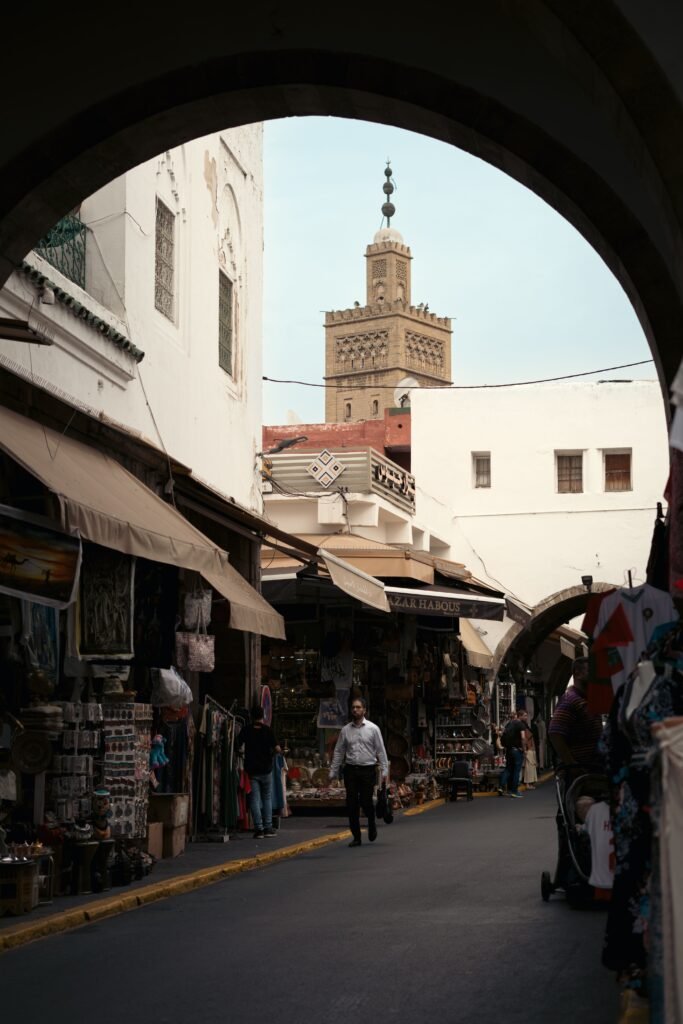
Scams cluster in specific, predictable spots: the medina, the Kasbah, Grand Socco, and around the port and main squares — anywhere large crowds of tourists gather. This doesn’t mean avoid these places (they’re the whole point of visiting) — just stay a little more alert there than you would on a quiet residential street.
Walking Around: Day and Night
Daytime walking in the medina, beachfront and main streets is genuinely one of the best ways to experience Tangier — busy, lively, and normal. At night, stick to well-lit, populated areas and avoid wandering alone into quiet or unfamiliar side streets, the same common sense you’d apply in any unfamiliar city.
Tangier is manageable for solo women, but expect more street-level persistence (comments, offers of “help”) than you might in Western Europe. Dressing modestly, walking with visible confidence, and firmly declining unwanted attention with a simple “no, thank you” — no need to engage further — goes a long way. Staying in well-reviewed riads with 24-hour reception adds an extra layer of comfort.
Driving Safety
If you’re renting a car or bringing your own, city driving in Tangier is assertive — scooters, pedestrians and cars share space in ways that can feel chaotic at first. Stay alert, avoid night driving on unfamiliar roads, and expect overtaking on narrow roads as a normal local habit rather than aggression aimed at you. See our full guide on renting a car without getting scammed for the specific rental-related traps.
📕 Want all of this in your pocket?
Our Practical Pack condenses the border checklist, ferry playbook, real prices, scam defenses and a Darija cheat sheet into 14 printable pages — 4.90 €.
Get the Practical Pack →FAQ
Is Tangier safe for families with children?
Yes. Families are common visitors, and the main tourist areas — medina, beachfront, main squares — are lively and welcoming. The same scam-awareness applies; kids don’t change the risk profile meaningfully.
Is it safe to walk in the medina alone?
Yes, during the day. The medina is busy, frequented by locals and tourists alike, and generally safe to explore on foot — just expect the persistence described above from vendors and unofficial guides.
Should I avoid public Wi-Fi for financial transactions?
It’s a reasonable precaution anywhere, Tangier included. Use your Morocco eSIM’s mobile data instead of public Wi-Fi for banking or sensitive logins — see our guide on getting internet in Morocco.
Are there areas of Tangier tourists should avoid entirely?
No specific neighborhood is off-limits for reasonable daytime visits. The general rule — avoid poorly lit, empty areas at night, regardless of neighborhood — covers the actual risk better than any no-go list.
Planning the Rest of Your Northern Morocco Trip?
Tangier is where most Northern Morocco trips begin. Our premium guide covers the complete 7-day itinerary from here — Assilah, Tetouan, Chefchaouen and Akchour — with the same honest, practical approach to prices and safety throughout.
Before you book, here’s one more thing worth checking: get travel insurance for Morocco sorted first — especially if your trip includes activities like hiking that some baseline policies exclude.
Travel with peace of mind
These are the booking tools we recommend for this route.
Do You Need Travel Insurance for Morocco? Where to Stay in TangierNorthern Morocco Road Trip Guide
The complete 7-day itinerary, hour by hour — real prices, parking GPS points, tested riads and printable checklists.
Final Thoughts
Tangier deserves its growing reputation as an easy, rewarding entry point into Morocco. The risk isn’t danger — it’s a handful of predictable scams that lose all their power once you know what they look like. Fix your prices out loud, use the meter, book guides through your riad, and you’ll spend your energy enjoying the city instead of second-guessing every interaction.