⚡ Quick Answer
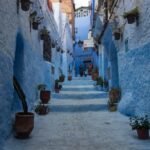
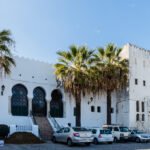
Tétouan is the stop almost everyone skips between Tangier and Chefchaouen — and shouldn’t. Its UNESCO-listed medina is the most authentically Andalusian in Morocco: whitewashed, compact, unhurried, and virtually souvenir-hustle-free. One day covers the essentials: Place Hassan II, the medina souks, the royal artisan school of Dar Sanaa, and a rooftop view over the Rif from the Ethnographic Museum. Entry to the medina is free; the city sits about 1 hour from Tangier and 1 hour from Chefchaouen, making it the perfect road-trip stop between the two.
Every day, buses and grand taxis full of travelers shuttle between Tangier and Chefchaouen — and roll straight past one of Morocco’s most remarkable cities without stopping. Tétouan doesn’t advertise itself. It doesn’t need to: it was the capital of Spanish Morocco, it’s the most Spanish-speaking city in the country, and its medina has been a UNESCO World Heritage Site since 1997 precisely because it’s so untouched.
Here’s the thing that makes Tétouan special for visitors: it’s a working medina, not a performing one. People shop in the souks because that’s where they shop. Nobody follows you down alleys offering “just to look.” After the intensity of Tangier or the Instagram crowds of Chefchaouen, Tétouan feels like being let in on a secret. Here’s how to spend one perfect day.
Why Tétouan Is Called “The Daughter of Granada”
When Granada fell in 1492, Muslim and Jewish refugees from Al-Andalus crossed the strait and rebuilt Tétouan, led by Sidi Ali Al-Mandari. They brought Andalusian architecture, crafts, music and cuisine with them — and because the city was never heavily rebuilt or touristified, that heritage survives with unusual purity. UNESCO listed the medina in 1997 for exactly this reason: it’s small, remarkably intact, and largely free of outside influence.
The Spanish returned in a different form centuries later: Tétouan served as the capital of the Spanish Protectorate from 1912 to 1956, which is why the city center pairs its Arab-Andalusian medina with the Ensanche — a Spanish-built new town of boulevards and Art Deco façades. You’ll still hear Spanish spoken in the streets more than anywhere else in Morocco.
Your One-Day Itinerary
- 🌅 9:00 AM — Place Hassan II. Start at the grand square linking the new town to the medina, framed by the Royal Palace (admire the façade — it’s not open to visitors). Grab a mint tea at a café on the square before diving in.
- ☀️ 9:30 AM — Into the medina. Enter and let yourself get purposefully lost. The medina is compact enough that you can’t stay lost for long — downhill generally leads back out. Work your way through the souks: spice stalls, the jewelry quarter, leather workshops near the old tanneries, and the weavers’ lanes. Look for tarz tetouani — the city’s famous gold-thread embroidery — and the blue-and-white Tetouani ceramics.
- 🌤️ 11:30 AM — Dar Sanaa, the royal artisan school. Just outside Bab el-Okla, this is Morocco’s oldest arts-and-crafts school, founded in 1919 to preserve Hispano-Moorish craftsmanship. Students practice zellige mosaic, wood carving, plaster work, leather embossing and embroidery in a beautiful courtyard building. Visits are typically possible on weekdays until mid-afternoon; a small donation (20–50 MAD) is appreciated, and the cooperative shop sells student work at fair prices — the best-value authentic souvenirs in the city.
- 🕐 1:00 PM — Lunch. Book a table at Dar La Médina, a restored riad serving refined Tetouani cooking — the city’s Andalusian-Moroccan food culture on a plate. Save room for kaab el ghazal (“gazelle horns”), the almond-filled crescent pastry Tétouan does better than anywhere.
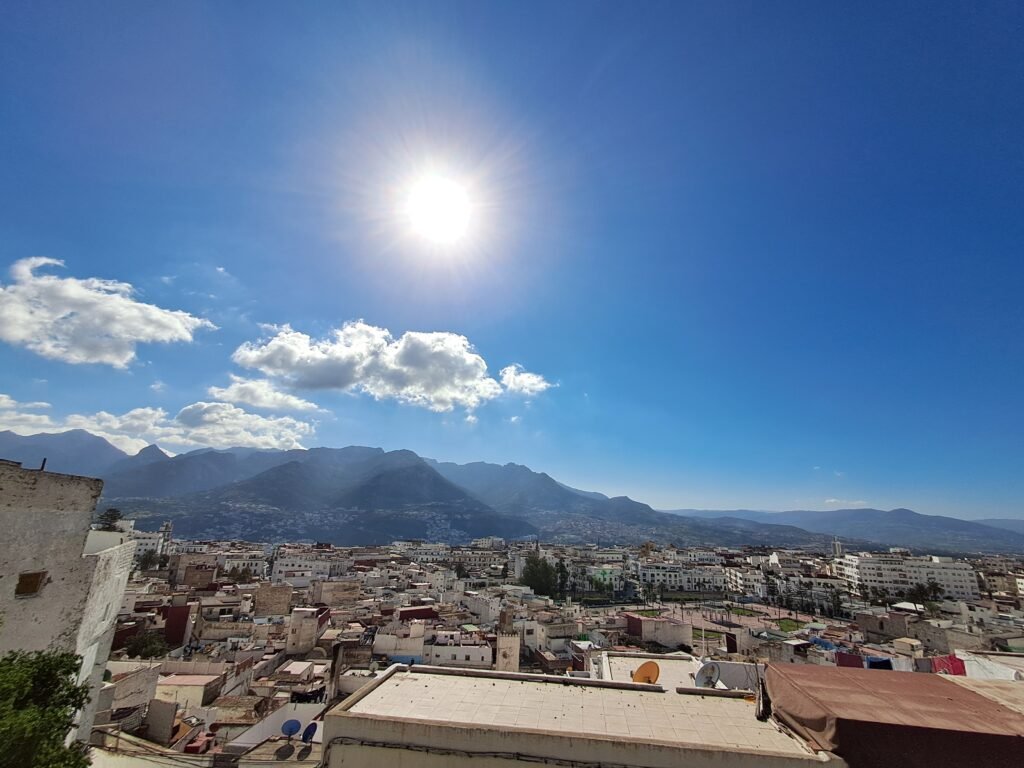
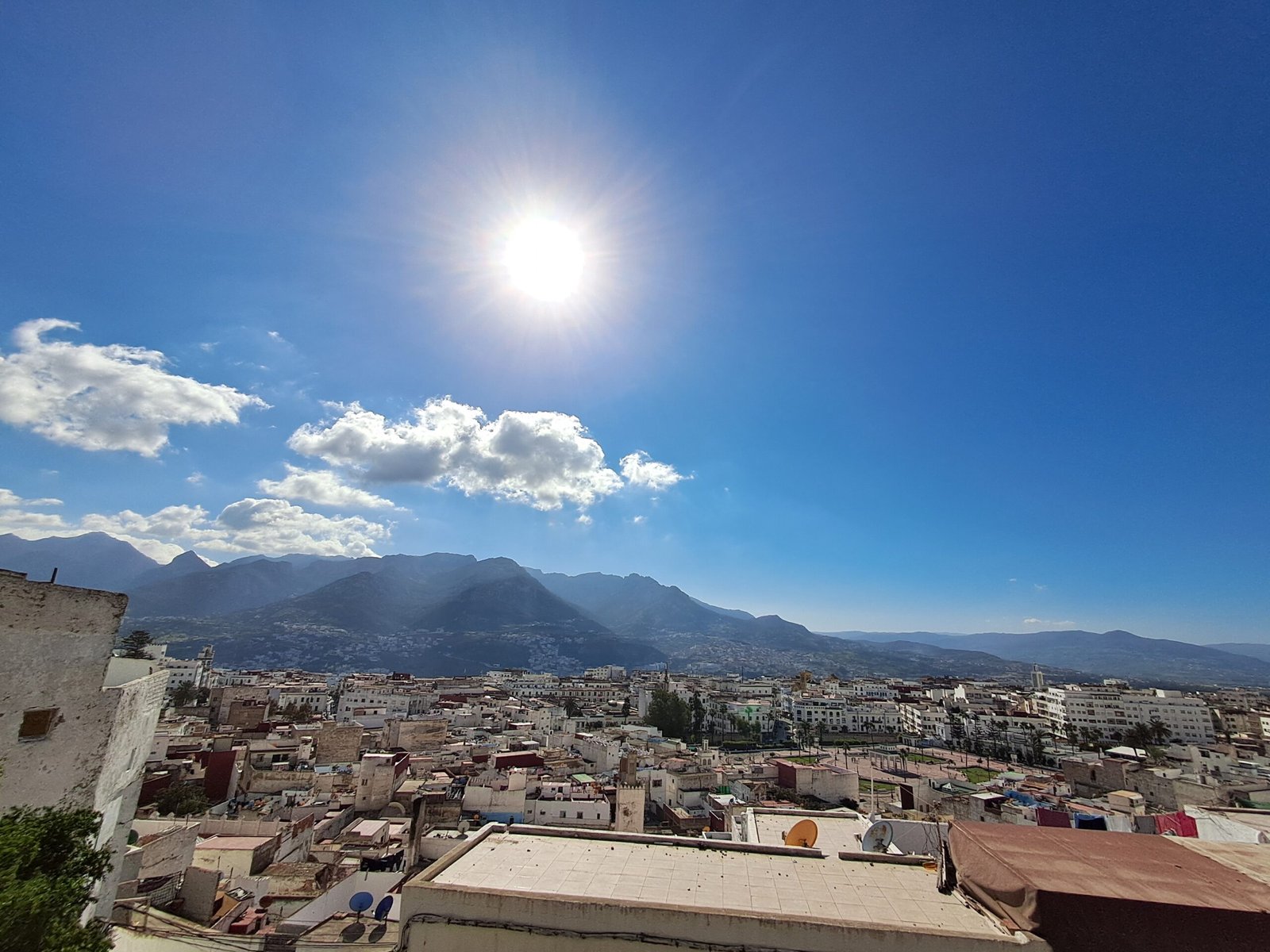
- 🌇 2:30 PM — The Ethnographic Museum. Housed in a 19th-century fortress near Bab el-Okla: traditional costumes, jewelry, embroidery and furniture — and a rooftop terrace with a panorama over the white city and the Rif Mountains behind it. This view is the photo you came for.
- 🌆 4:00 PM — The Ensanche & Modern Art. Cross into the Spanish quarter for a completely different city: palm-lined boulevards, Art Deco balconies, and the Tetouan Center of Modern Art in a gorgeous Andalusian-style former railway station. Tétouan has one of Morocco’s strongest fine-arts traditions, and this is its showcase.
- 🌙 5:30 PM — Golden hour back at Place Hassan II before heading onward — Chefchaouen and Tangier are each about an hour away, and the Mediterranean beaches of Martil are just 15–20 minutes downhill if you’re staying the night.
The Secret Almost Nobody Knows: You Can Fly Straight into Tétouan
Here’s the detail missing from virtually every guide: Tétouan has its own international airport — Sania R’mel (TTU), barely 10 minutes from the city center — with direct flights from a dozen European cities. Royal Air Maroc flies year-round from London Gatwick, Paris, Brussels, Madrid, Barcelona and Málaga; Ryanair adds seasonal routes from Alicante, Madrid, Málaga, Brussels Charleroi and Marseille; TUI Fly and Air Arabia cover Brussels and Amsterdam. Fares from southern Spain regularly drop to €25–45.
Translation: instead of landing in Tangier and working your way east, you can start your Northern Morocco trip in Tétouan itself — often cheaper than flying into Tangier, and with a fraction of the airport crowds. TTU is a small, calm airport: you’ll be out with your bag fifteen minutes after landing.
✈️ Check Flights to Tétouan (TTU)
Compare direct routes from London, Paris, Brussels, Madrid, Barcelona and Málaga — and check Tangier (TNG, 1h away) side by side, since prices swing between the two.
Search on Kiwi → Compare on Aviasales →From the Airport to the City
Sania R’mel sits about 5 km from central Tétouan. Petit taxis wait outside arrivals — it’s a short ride, so agree the fare before getting in (a modest sum; insist politely on the meter if offered). Grand taxis can take you directly onward to Martil’s beaches or M’diq if you’re staying on the coast. There’s no need to pre-book anything for this airport — it’s genuinely that simple.
Getting There by Road
- From Tangier: about 1 hour by road (roughly 65 km from Ibn Battouta Airport). CTM buses and shared grand taxis run frequently through the day; a rental car makes it an easy, flexible stop. Rather not drive or negotiate taxis? A full-day Tétouan tour from Tangier handles transport and guiding in one booking.
- From Chefchaouen: about 1 hour by road down out of the Rif — which is exactly why Tétouan works so well as the missing middle stop on the classic Tangier ↔ Chefchaouen run.
- By car — the smart way to do it: with your own wheels, you can leave Tangier in the morning, spend the day in Tétouan, and sleep in Chefchaouen — or add a sunset swim at Martil on the way. This is the exact route our road-trip itinerary is built around.
🚗 Doing the Tangier–Tétouan–Chefchaouen Route?
A rental car turns three separate bus rides into one beautiful road trip. We use DiscoverCars to compare Tangier pickup prices — free cancellation, no hidden fees.
Compare Car Rental Prices →Where to Stay in Tétouan
Three distinct options, depending on the trip you’re building:
- Inside the medina — for atmosphere. A restored riad in the old city is the full Tétouan experience: carved plaster, quiet courtyards, rooftop breakfasts over white terraces. Our pick is Dar La Médina — the address we recommend in our paid road-trip guide, and the reason several of our readers now insist Tétouan deserves an overnight, not just a stop.
- The Ensanche — for convenience. The Spanish new town has modern hotels with easier parking and wider streets — practical if you’re arriving by rental car and want to walk into the medina in five minutes rather than navigate into it.
- Martil, M’diq or Cabo Negro — for the beach. Fifteen to thirty minutes away, the Mediterranean resorts offer seafront hotels and apartment stays. In July–August they fill with Moroccan holidaymakers — book ahead and expect a lively, family-heavy scene; in shoulder season they’re blissfully quiet.
Beyond the Medina: What Else to Do Around Tétouan
- Tamuda ruins (15 min): the remains of a Roman-era town just outside the city — modest but atmospheric, and you’ll likely have them to yourself. The best finds from the site live in Tétouan’s Archaeological Museum, whose garden displays Roman mosaics from Lixus, the Roman city near Larache, covered in our Larache & Lixus day trip guide.
- Martil Beach (15–20 min): a long sandy Mediterranean beach with a palm-lined promenade — the city’s summer living room.
- M’diq & Cabo Negro (25–30 min): the more polished stretch of coast — marina, golf, and calmer swimming coves.
- A traditional hammam: Tétouan’s bathhouses remain genuinely local institutions — go with the flow, bring flip-flops, and come out reborn.
- Day trips: Chefchaouen’s blue medina (about 1h), the Akchour waterfalls in Talassemtane National Park (full day), and Tangier with Cap Spartel and the Caves of Hercules (about 1h) are all within easy reach — Tétouan can genuinely serve as your base for the whole region.
💡 Smart Tips
- Go on a weekday if you can. Dar Sanaa’s workshops are liveliest when students are working, and the souks run at full rhythm Monday to Friday.
- Spanish works here. If you speak any Spanish at all, use it — Tétouan is Morocco’s most hispanophone city, and shopkeepers light up when you try.
- The medina is genuinely hassle-free, but it’s also genuinely a maze. Offline-download the map before entering; GPS holds up better here than in Fes-scale medinas.
- Buy crafts here, not in Tangier. Tetouani embroidery, inlaid wood and ceramics are made in this city — prices are fairer at the source, and Dar Sanaa’s shop is the most trustworthy starting point.
- Museum days vary. Most museums close one day a week (often Monday or Tuesday) and renovations happen — if one is shut, the medina itself is the main exhibit anyway.
- Pair it with the beach in summer. Martil’s long sandy beach is 15–20 minutes away — a swim before the drive onward is the most underrated end to a Tétouan day.
FAQ
Is Tétouan worth visiting?
Yes — especially if you value authenticity over spectacle. It has Morocco’s best-preserved Andalusian medina, UNESCO-listed since 1997, with a fraction of the tourists (and none of the hassle) of the famous cities. It’s the connoisseur’s stop on the northern route.
How long do you need in Tétouan?
One full day covers the medina, Dar Sanaa, a museum and the Ensanche comfortably. With a second day you can add the beaches of Martil and M’diq or the Roman ruins of Tamuda just outside the city.
Is Tétouan’s medina safe for tourists?
Yes. It’s a lived-in, working medina where tourism is a side note, not the main event — which in practice means far less hustle than Tangier or Marrakech. Normal city awareness applies, and the usual advice about dressing respectfully (shoulders and knees covered) goes a long way.
Tétouan or Chefchaouen — which should I visit?
Both — they’re an hour apart and completely different. Chefchaouen is the photogenic blue village in the mountains; Tétouan is the real Andalusian city with the deeper history and craft culture. The ideal answer is the road trip that includes both, with Tétouan as the stop that surprises you.
Can you do Tétouan as a day trip from Tangier?
Easily — 1 hour each way by bus, grand taxi or rental car. Leave by 8:30 AM and you’ll have a full Tétouan day and be back in Tangier for dinner.
Can you fly directly to Tétouan?
Yes — Sania R’mel Airport (TTU), 10 minutes from the center, has direct flights from London, Paris, Brussels, Amsterdam, Madrid, Barcelona, Málaga, Alicante and Marseille, plus domestic links to Casablanca and Marrakech. Compare TTU against Tangier (TNG) when booking: the cheaper airport varies by route and date, and the two cities are only an hour apart.
🗺️ Tétouan is one stop — here’s the whole route.
Our Northern Morocco Road Trip Guide connects Tangier, Tétouan, Chefchaouen, Akchour and Asilah into one seamless itinerary — with day-by-day plans, real venue picks (including our Tétouan favorites), and GPS coordinates for every stop. Get the guide here →