⚡ Quick Answer
One perfect day in Chefchaouen: wander the blue medina in the early morning light (before the day-trip buses arrive around 10), visit the Kasbah on Place Outa el-Hammam (60 MAD for foreigners — museum, Andalusian garden and tower views included), follow the lanes to the Ras El Ma spring, then hike 25 minutes to the Spanish Mosque for sunset over the blue city. Stay the night if you possibly can — Chefchaouen before 9 AM and after 6 PM, when the day-trippers are gone, is a different and far better town.
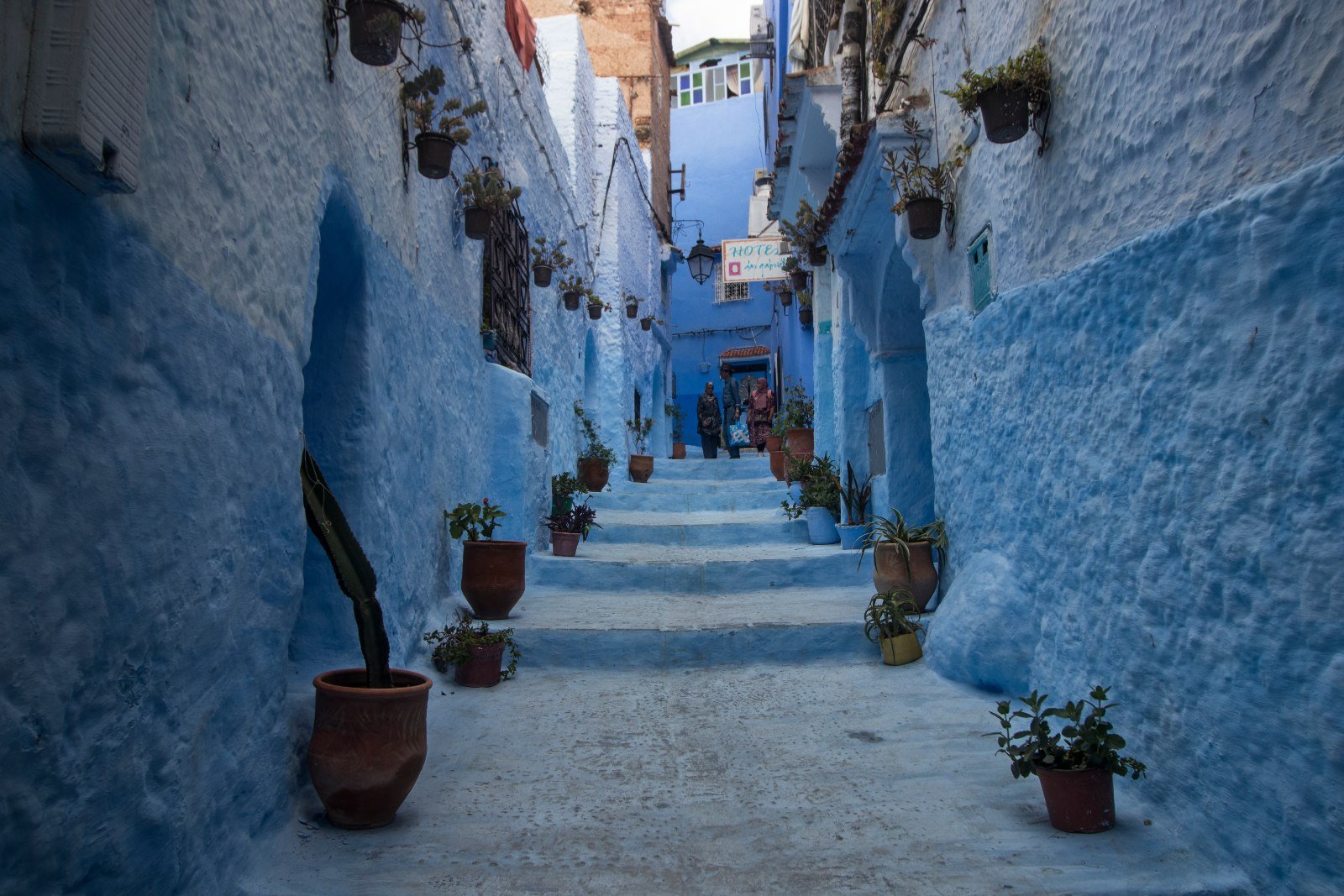
Yes, it’s really that blue. Every guidebook cliché about Chefchaouen turns out to be understatement: the lanes are bluer, the mountains closer, the pace slower than the photos suggest. But here’s what the photos don’t tell you — the town has two completely different lives. Between 10 AM and 5 PM it belongs to the day-trip buses from Fes and Tangier. Before and after, it belongs to its residents, its cats, and the handful of travelers smart enough to sleep here.
This guide is built around that rhythm: how to spend one day in the Blue Pearl so that you get the town at its best, not just its busiest — plus the honest answers about why it’s blue, what things cost, and whether the famous sunset hike is worth it (it is).
First: Why Is Chefchaouen Blue?
Ask five locals and you’ll hear five answers, all delivered with total confidence. The leading theories: Jewish refugees who settled here in the 1930s painted their quarter blue as the color of the sky and the divine; the blue repels mosquitoes; it keeps houses cool in summer; and — the honest modern footnote — it stays this immaculately blue because the town keeps repainting it, partly for the visitors it now welcomes. The truth is probably all of the above, layered over five centuries. The town itself was founded in 1471 as a mountain fortress against Portuguese incursions, and grew with waves of Andalusian refugees — which is why its alleys, arches and tiled fountains feel like a blue-washed cousin of the villages across the strait.
Your One-Day Itinerary
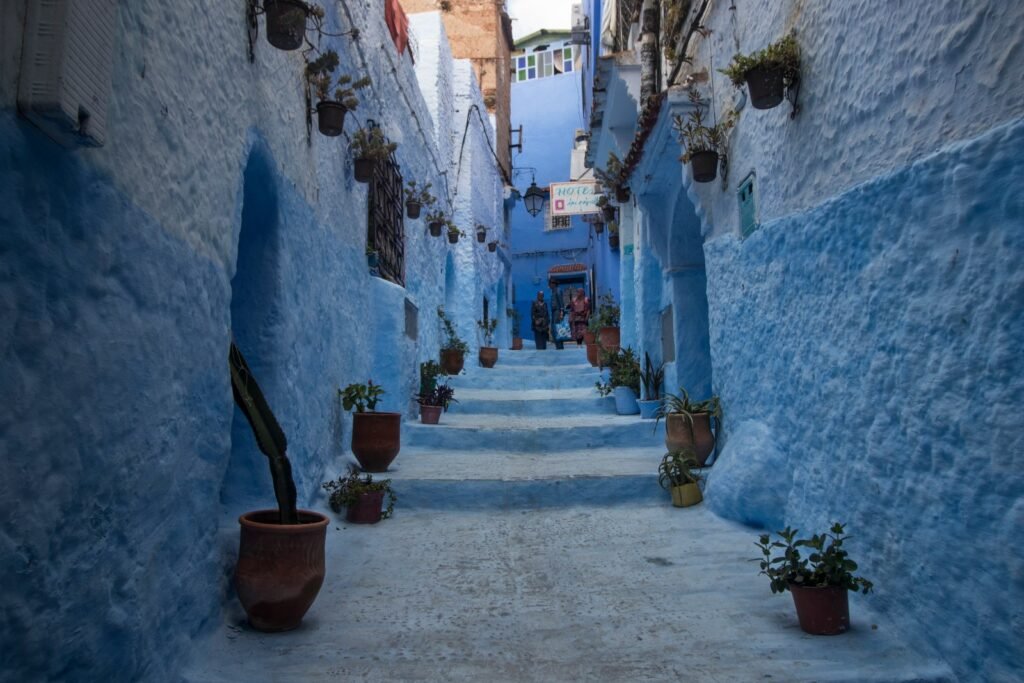
- 🌅 8:00 AM — The medina before the buses. This is the golden window: soft mountain light, shopkeepers opening up, cats claiming their doorsteps, and the famous photo lanes (you’ll recognize them) empty. Wander without a plan — the medina is small enough that getting lost lasts ten minutes at most, and every wrong turn is the right one.
- ☀️ 10:00 AM — The Kasbah & Place Outa el-Hammam. The red-earth fortress at the heart of the main square was built by the town’s founder, Moulay Ali Ben Rachid, in 1471. Entry is 60 MAD for foreign visitors (10 MAD for Moroccans) and includes the ethnographic museum, a genuinely lovely Andalusian garden, and the tower climb — the best structured viewpoint over the blue rooftops. The square below, framed by the Grand Mosque’s unusual octagonal minaret, is Chefchaouen’s living room: claim a café chair and watch it all go by.
- 🕐 1:00 PM — Lunch. Our two picks, both from our paid guide: Cafe Clock — the Chefchaouen outpost of Morocco’s beloved cultural café, great for everything from camel burgers to vegetarian plates, often with music or events; and Cafe Zambra — the relaxed, reliable local favorite we send readers to when they ask “where would you actually eat?” Prefer to eat your way through town instead? A 4-hour Chefchaouen food walking tour (meeting at Bab El Ain, free cancellation) covers tagine, pastries and the market stalls with a local guide.
- 🌤️ 2:30 PM — Souks & weaving workshops. Chefchaouen has been a weaving town since the 15th century, and its signature striped Rif blankets and wool garments are made here, not imported. Seek out the loom workshops in the upper lanes, buy directly from the weaver, and haggle gently — prices here are fairer and the hassle far lower than in the imperial cities.
- 🌇 4:30 PM — Ras El Ma. Follow the medina’s uphill lanes toward the sound of water: the spring at the town’s northeastern edge is where mountain water tumbles into the town, where women still wash wool by hand, and where mint-tea terraces overlook it all. It’s free, it’s lively, and it’s the trailhead for what comes next.
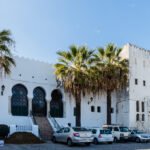
- 🌆 5:30 PM — The Spanish Mosque sunset hike. The whitewashed mosque on the hill east of town — built during the Spanish era and never actually used for worship — is Chefchaouen’s definitive viewpoint. The path from Ras El Ma takes 20–30 minutes, steep and rocky in stretches (real shoes, water). Arrive 30 minutes before sunset to claim a spot: watching the blue city turn violet and gold as the evening call to prayer rises from below is the single best free experience in Northern Morocco.
- 🌙 8:00 PM — Dinner in the emptied town. The buses are gone. The squares glow. This is the Chefchaouen you came for — and the argument for spending the night. If you are staying over, we’ve reviewed the best places in our guide to Chefchaouen’s 10 best riads.
Getting to Chefchaouen
There’s no airport and no train — the Blue City earns its remoteness. From Tangier it’s about 2 hours by road (CTM bus, grand taxi, or rental car); we’ve compared every option in our Tangier to Chefchaouen transport guide. From Tétouan it’s about an hour — pairing the two is the smartest route in the North, and our Tétouan guide explains why the stop is worth it. From Fes, count on 3.5–4 hours each way, which is exactly why Fes day-trippers see so little of the real town.
🚗 The Rif Drive Is Part of the Experience
The mountain road up to Chefchaouen is one of the North’s great drives — and your own car means arriving before the buses and staying past sunset. We compare prices with DiscoverCars.
Compare Car Rental Prices →Got More Than a Day? Akchour Is the Answer
Forty-five minutes from town, the Akchour waterfalls in Talassemtane National Park are the Rif at its wildest: turquoise pools, the God’s Bridge rock arch, and a river-canyon hike that ranks among Morocco’s best. It deserves a full day of its own — our complete Akchour guide covers the trail, timings and what to bring.
🚌 Prefer a Guided Tour?
If you’d rather skip the logistics, KKday runs day trips and multi-day tours covering Chefchaouen, Tangier and Asilah — transport, guide and hotel pickup included.
Browse Northern Morocco Tours →💡 Smart Tips
- Sleep here. The single best decision you can make. Day-trippers get the crowds; overnighters get the dawn lanes and the post-sunset calm.
- Photograph early, shop late. The famous lanes are empty before 9 AM; the workshops are unhurried after 5 PM. The middle of the day is for the Kasbah, lunch and the square.
- Be gracious in the lanes. These blue streets are people’s front doors. Ask before photographing residents, keep voices low in the early morning, and remember the town’s beauty is somebody’s daily upkeep.
- About the hashish offers: the Rif is a major growing region and you may be quietly offered some near the square. The sellers aren’t aggressive — a simple “la, shukran” ends it — but remember it remains illegal, and a polite pass is the smart traveler’s answer.
- Real shoes for the Spanish Mosque. The path is rocky and the descent is in fading light — trainers over sandals, and take water.
- Cash town. Cafés, workshops and the Kasbah ticket booth run on dirhams; ATMs cluster near Bab El Ain and the new town. Prices shift seasonally — treat every number in every guide (ours included) as a snapshot.
FAQ
Is one day enough for Chefchaouen?
One day covers the essentials — medina, Kasbah, Ras El Ma and the sunset hike — if you’re here from morning to evening. But the town rewards an overnight more than almost anywhere in Morocco: the hours before 9 AM and after 6 PM are when it’s at its best. With two days, add the Akchour waterfalls.
How much does the Kasbah cost?
60 MAD for foreign visitors and 10 MAD for Moroccans, including the ethnographic museum, the Andalusian garden and the tower viewpoint. Hours run roughly 9:30 AM–6:30 PM with a midday break — and prices and hours do change, so treat this as a recent snapshot rather than a promise.
Is the Spanish Mosque hike hard?
It’s a short, steep 20–30 minute walk from Ras El Ma on a rocky path — very doable for anyone reasonably mobile, with proper shoes. The viewpoint is free and unfenced; the crowd at sunset is part of the atmosphere, not a problem.
Is Chefchaouen a tourist trap?
It’s touristy in the middle of the day — the blue is famous for a reason — but it never feels cynical: prices stay reasonable, hassle is minimal by Moroccan-city standards, and the town’s ordinary life carries on around the visitors. Structure your day around the bus schedules (early and late) and you’ll find the authenticity intact.
Chefchaouen or Tétouan — can I do both?
Absolutely — they’re an hour apart and perfectly complementary: Chefchaouen for the mountain spectacle, Tétouan for the UNESCO Andalusian medina almost everyone misses. Together with Tangier they form the classic Northern triangle.
🗺️ The Blue City is the highlight — here’s the whole route.
Our Northern Morocco Road Trip Guide connects Chefchaouen, Akchour, Tétouan, Tangier and Asilah into one seamless itinerary — day-by-day plans, our real venue picks (Cafe Clock and Cafe Zambra included), and GPS coordinates for every stop. Get the guide here →