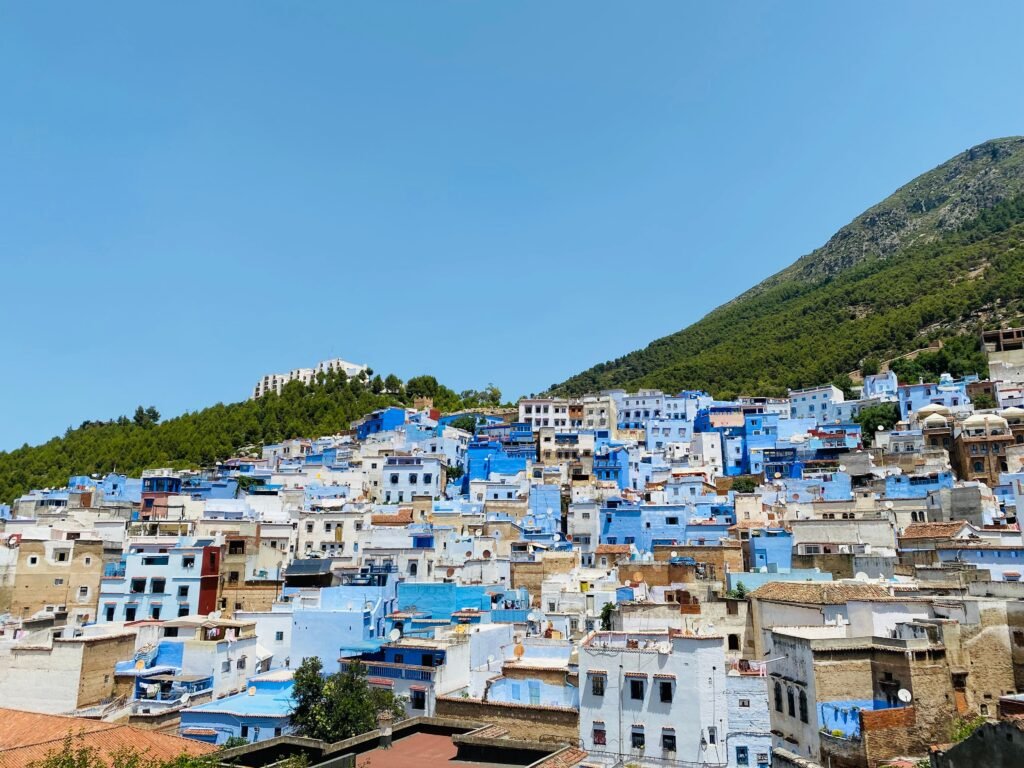
Northern Morocco has a genuine Mediterranean climate — real seasons, real rain in winter, and a summer heat that’s noticeably gentler than what hits Marrakech or the desert further south. That makes timing less about avoiding brutal heat and more about balancing weather, crowds, and what you specifically want to do.
Quick Answer
Best overall: April-May or late September-October. Mild temperatures, manageable crowds, and — if Akchour is on your list — reliable waterfall flow. Summer (July-August) is warm but not extreme thanks to Rif mountain elevation, though it’s peak season with higher prices. Winter (December-February) is quiet and cheap, but wet, with Chefchaouen seeing real cold and rain.
Northern Morocco’s Climate, Briefly
This region — Tangier, Tetouan, Chefchaouen, Asilah — sits in a Mediterranean climate zone: hot, dry summers and mild, wetter winters. It’s noticeably different from Marrakech or the Sahara; expect real rainfall in winter and spring, and summer heat that rarely feels punishing, especially once you’re up in the Rif mountains around Chefchaouen.
Month by Month
| Month | Tangier (avg high) | Chefchaouen (avg high) | Notes |
|---|---|---|---|
| January | ~16°C | ~15°C | Coldest month, real rain, very quiet, cheapest rates |
| February | ~16°C | ~16°C | Still cool and quiet, good for budget travel |
| March | ~18°C | ~18°C | Spring begins, rain still likely, Akchour waterfalls strong |
| April | ~20°C | ~21°C | Excellent weather, flowers blooming, moderate crowds |
| May | ~22°C | ~24°C | One of the best months overall — warm, still green, waterfalls flowing |
| June | ~25°C | ~28°C | Warming up, early summer crowds beginning |
| July | ~27°C | ~31°C | Peak summer, European holiday crowds, Akchour Grand Cascade reduced flow |
| August | ~28°C | ~32°C | Warmest month, busiest, book well ahead |
| September | ~26°C | ~29°C | Still warm, crowds thinning by late month |
| October | ~23°C | ~25°C | Excellent — arguably the best all-round month |
| November | ~19°C | ~19°C | Cooling down, rain returning, quiet and pleasant |
| December | ~17°C | ~16°C | Mild but wet, low season pricing |
Figures are approximate seasonal averages — always check a short-range forecast closer to your actual travel dates.
By Season
Spring (March-May) — The Favorite
Most experienced travelers point to spring, and for good reason: temperatures are comfortable for walking medinas and hiking, the countryside is green, and — importantly for this itinerary — Akchour’s waterfalls are at their most impressive thanks to snowmelt and spring rain. The tradeoff is a real chance of rain, especially in March.
Summer (June-August) — Warm, Not Brutal, But Busy
Unlike Marrakech or the desert, Northern Morocco’s summer is genuinely manageable — the Rif mountains keep Chefchaouen’s evenings cool even when daytime highs push past 30°C. The real drawback is volume: this coincides with European school holidays, so expect higher accommodation prices and busier medinas. Akchour’s Grand Cascade route also loses some of its drama in peak summer as water flow drops — God’s Bridge holds up better year-round.
Autumn (September-November) — The Quiet Favorite
Autumn rivals spring and, by some measures, beats it. September is still warm, October is close to ideal — comfortable temperatures, manageable crowds, and good light for photos. By November, rain starts returning but temperatures remain mild.
Winter (December-February) — Quiet and Cheap
The off-season, and it shows in prices — this is when you’ll find the best deals on riads. The tradeoff is real: Chefchaouen sees genuine cold and consistent rain, and some outdoor activities (a full Akchour hike, for instance) become less appealing in wet, slippery conditions. Still entirely doable, just pack accordingly.
If Akchour’s waterfalls are a big part of why you’re going, aim for March-June — that’s when water flow is most reliably impressive. If budget matters more than waterfall drama, winter delivers the cheapest riad rates of the year, and the medinas are still very much open for business.
Ramadan: A Timing Factor Worth Knowing
If your trip coincides with Ramadan, expect shifted hours: many restaurants close during the day and open after sunset (iftar), while some shops and attractions run reduced hours. It’s not a reason to avoid visiting — many travelers find it a genuinely interesting time to be in Morocco — but it does change your daily rhythm, so check the current-year dates and plan meals accordingly, since the Islamic calendar shifts roughly 10-11 days earlier each year.
FAQ
What’s the single best month to visit Northern Morocco?
October and May are the two strongest contenders — both offer comfortable temperatures, good light, and crowds that are present but manageable.
Is it too cold to visit in winter?
Not too cold to enjoy, but genuinely cool and wet, particularly in Chefchaouen. Pack layers and a rain jacket, and expect fewer outdoor-hiking-perfect days.
Does it rain a lot in Northern Morocco?
More than travelers expect, especially compared to Marrakech or the south. Winter and early spring see the most rainfall — factor a light rain layer into your packing regardless of season.
When are Akchour’s waterfalls most impressive?
Spring, roughly March through June, when snowmelt and rain keep water flow strong. By peak summer, the Grand Cascade route can reduce to a trickle, though God’s Bridge stays scenic year-round.
Planning Your Trip?
Whatever month you choose, our premium Northern Morocco Road Trip Guide covers the complete 7-day itinerary with real prices, tested stops, and honest logistics for every season.
Book with your season in mind
These are the booking tools we recommend for this route.
Plan Your Full Week in the North Do You Need Travel Insurance for Morocco?Northern Morocco Road Trip Guide
The complete 7-day itinerary, hour by hour — real prices, parking GPS points, tested riads and printable checklists.
Final Thoughts
There’s no genuinely bad month to visit Northern Morocco — just different tradeoffs. If you can choose freely, April-May or September-October give you the best balance of weather, crowds and cost. If you’re locked into summer or winter for other reasons, both are entirely workable once you know what to expect and pack accordingly.