⚡ Quick Answer
Oued Laou is the laid-back fishing-and-beach village where Northern Morocco’s two most beautiful roads meet: the cliff-hugging coastal N16 from Tétouan (about an hour of Mediterranean corniche) and the R412 from Chefchaouen, which winds down through the dramatic Laou river gorges. Come for the drive, stay for the long dark-sand beach, the clay-pot tagra fish lunch, and — if it’s Saturday — one of the region’s most authentic weekly souks. Almost no international tourists, no monuments, no hassle: just the Rif meeting the sea the way it always has.
Some places earn their place on this site by being famous. Oued Laou earns it by being the opposite: the stretch of coast between Tétouan and this unhurried river-mouth village is, for our money, the most beautiful drive in Northern Morocco — and international travel media has essentially never heard of it. Moroccan families know; they’ve been summering here for generations. Everyone else drives the inland roads and misses the show.
This is our guide to doing it right: the two spectacular ways in, what to actually do in the village (pleasantly little), the Saturday souk, and how Oued Laou turns a Tétouan–Chefchaouen transfer into the best detour of your trip.
The Real Attraction: Two of Morocco’s Great Roads
Route 1 — The Coastal N16 from Tétouan (~1 hour)
South of the Tétouan beach towns, the N16 stops being a beach road and becomes a corniche: carved into cliffs above the Mediterranean, swooping through headlands, with the sea a sheer drop to your left and the Rif rising to your right. Every few kilometers a viewpoint or a fishing cove begs a stop — budget double the driving time and thank us later. This is the drive that makes people fall in love with the North.
Route 2 — The R412 from Chefchaouen (~1.5 hours)
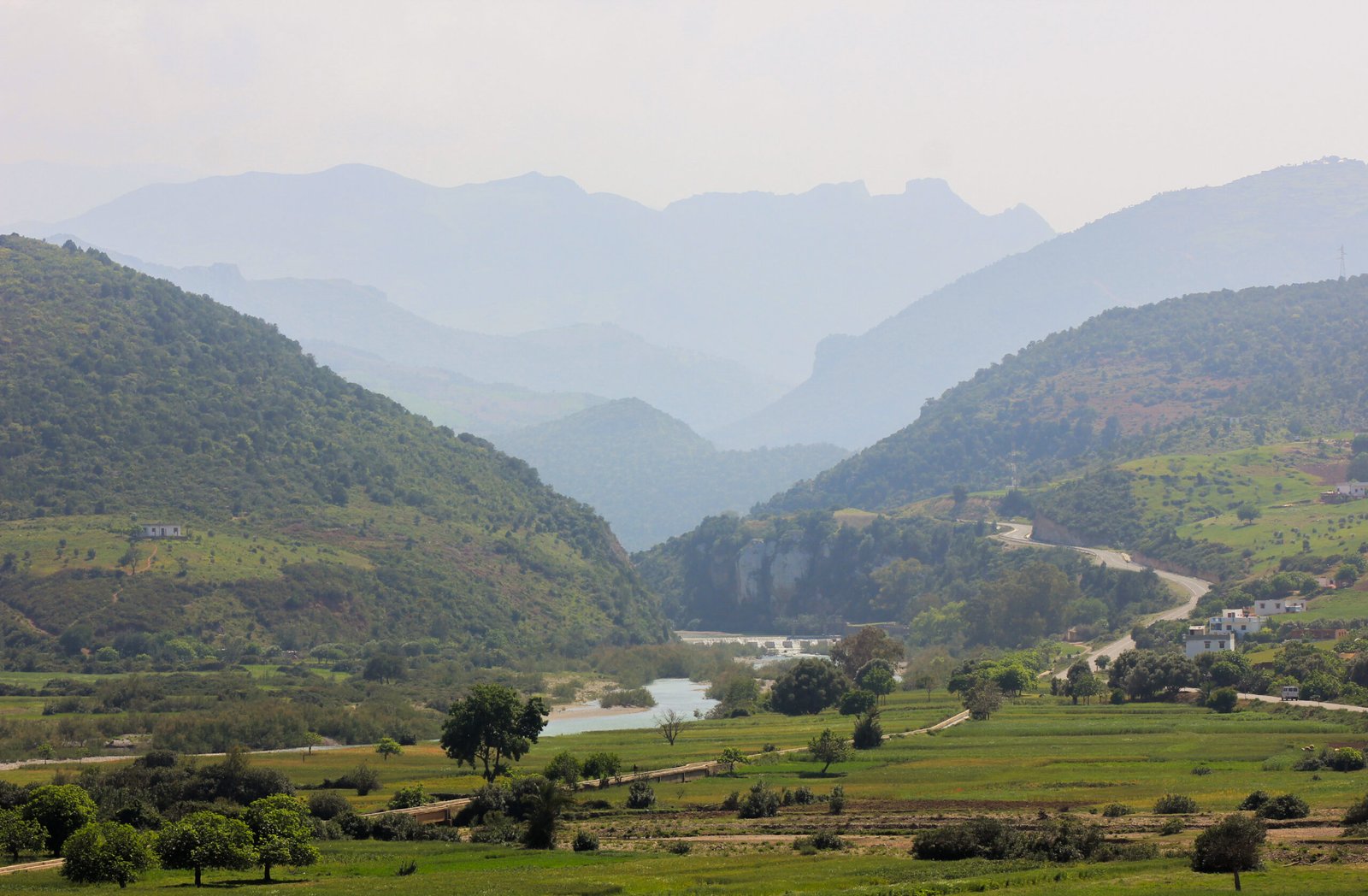
The inland approach is the coastal road’s dramatic sibling: from the blue city, the R412 descends the valley of the Oued Laou river through a sequence of gorges — sheer rock walls, terraced villages clinging to slopes, the river flashing green below — before the valley opens out and delivers you to the sea. Doing one road in and the other out turns Tétouan → Oued Laou → Chefchaouen into a loop that beats any highway transfer ever devised.
🚗 This Is a Rental-Car Route, Full Stop
Buses exist, but the whole point is stopping at every viewpoint. The corniche and the gorges are why you rent the car. We compare prices with DiscoverCars — free cancellation, no hidden fees.
Compare Car Rental Prices →The Village: Beautifully Little to Do
- The beach: a long, wide stretch of dark volcanic-toned sand backed by the Rif — spacious even in summer, near-empty the rest of the year. One honest safety note: the seabed deepens quickly here, so keep children close and swim within your depth.
- The fishing harbor rhythm: small boats, morning landings, and the direct line from net to grill that makes lunch decisions easy.
- Eat the tagra: this coast’s signature — fish baked in a glazed clay dish with tomatoes, peppers and chermoula. The beachfront and village grills do it properly; it’s the dish our Northern food guide tells you to hunt down, and this is its home water.
- Pottery country: the Laou valley has an old earthenware tradition — keep an eye out for the local clay work (including those tagra dishes) sold simply, without the souk theater of the big cities.
- Summer vs the rest: July–August brings Moroccan family holiday life — cafés full, beach football, evening promenades. Outside those months the village returns to fishing-town quiet, and facilities thin out accordingly: bring cash and expect simplicity.
Saturday: The Souk
If you can choose your day, choose Saturday: the weekly market draws sellers and buyers from the whole valley — produce, animals, spices, household goods, mountain honey and cheese — and it is utterly untouristed: this is commerce, not performance. Come in the morning, buy your picnic, practice your “bshhal?” (how much?), and see the Rif’s rural economy at work. It’s a genuine slice of life that no medina bazaar can replicate.
Beyond Oued Laou: The Road Keeps Giving
Continuing southeast, the N16 threads more coves and villages — Kaa Asras, Targha, Stehat — each sleepier than the last, with the same formula of beach, boats and grills. This is the coast for travelers who thought Morocco had no secrets left. Loop back to Chefchaouen via the gorges, or return along the corniche to the livelier beach towns and Tétouan.
💡 Smart Tips
- The perfect day-loop: Tétouan → coastal N16 (slow, all the stops) → tagra lunch in Oued Laou → R412 gorges up to Chefchaouen for sunset. Arguably the best single driving day in the North.
- Drive it in daylight. Both roads are well-surfaced but winding — the views are the point, and the bends deserve sun.
- Saturday planning: arrive by mid-morning for the souk at its liveliest; it winds down after lunch.
- Cash only territory. Grills, souk, cafés — dirhams everywhere; sort your cash in Tétouan or Chefchaouen first.
- Swimming honesty: the drop-off is real — fine for confident swimmers, watchful-parent territory for kids. Calmest in the morning.
- Fuel up before the loop — stations exist but are spaced out; start full and forget about it.
FAQ
Is Oued Laou worth visiting?
If you have a car and a free day between Tétouan and Chefchaouen: absolutely — the two roads alone justify it, and the village adds a beach, a proper lunch and (on Saturdays) a genuine souk. If you’re monument-hunting or bus-bound, spend the day elsewhere.
How do you get to Oued Laou?
By rental car, ideally: about an hour from Tétouan on the coastal N16, or roughly 1.5 hours from Chefchaouen down the R412 through the gorges. Grand taxis and local buses connect from Tétouan for the car-free, but you’ll miss the freedom to stop — which is most of the magic.
What day is the Oued Laou souk?
Saturday mornings — the valley’s weekly market, authentic and untouristed. Worth planning the whole detour around.
Can you swim at Oued Laou beach?
Yes — long, spacious, dark-sand and beautiful, with one caveat: the water deepens quickly close to shore, so it suits confident swimmers and demands attention with children. Mornings are calmest.
Is the coastal road from Tétouan to Oued Laou dangerous?
No — it’s a maintained national road; it’s simply winding and spectacular. Normal mountain-road care (daylight, patience, no rushing the bends) is all it asks.
🗺️ Secrets like this are the whole point of the road trip.
Our Northern Morocco Road Trip Guide weaves the coastal corniche and the gorge road into the full week-long route — Tangier, Tétouan, Chefchaouen, Akchour, Asilah and the coast, with day-by-day plans, our real venue picks and GPS for every stop. Get the guide here →